WorldPoint Instruments
Highly Accurate Data for Deep Analytics and AI
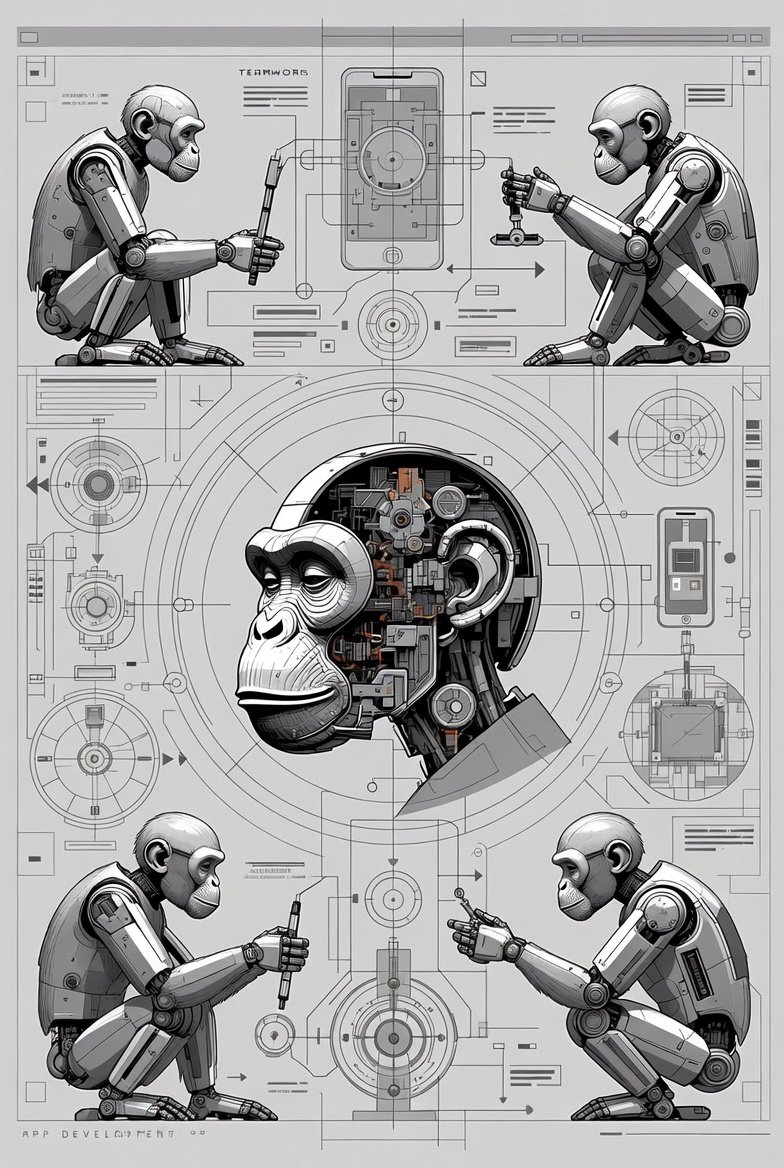
WorldPoint Instruments is a provisioner of highly accurate data and a valuable resource for deep analytics. We supply the curated, traceable material that teams rely on when the answer has to be right, whether they are training a model or interrogating a dataset for signal nobody else has found.
It began as a side project for Team of Monkeys: an effort to archive and preserve the work we had created over the years. The original motivation was ordinary. Projects accumulate, people forget why decisions were made, and the reasoning evaporates long before the code stops running. We had noticed something that sounds obvious once stated: memory fades faster than systems break. The artifact survives. The context that explains it usually does not.
Accuracy as the product
Most data suppliers compete on volume. We compete on whether the data is correct, and correctness is a property you have to engineer rather than assert. Every item in the archive carries its provenance, its transformation history, and enough surrounding context to judge whether it applies to your question. That is what separates a dataset you can build on from a pile of files that merely looks comprehensive.
The distinction matters most precisely when it is least visible. Inaccurate data does not announce itself. It produces a result that looks plausible, gets acted on, and only reveals the problem downstream when a decision built on it fails. Accuracy at the source is the cheapest place to catch that, by a wide margin.
A resource for deep analytics
Shallow analytics ask what happened. Deep analytics ask why, and that question needs a great deal more from the underlying material: consistent structure across time, enough granularity to segment without the sample collapsing, and metadata rich enough to support the comparison you actually want to make rather than the one your data happens to allow.
Our archives are built for that second kind of work. Because we preserve process alongside outcome, analysts can trace a result back through the decisions that produced it. Because we version everything, a finding from last quarter can be reproduced exactly rather than approximately. Analytical work is only as trustworthy as its inputs, and most analytical dead ends are data problems wearing a methodology costume.
From filing cabinet to training corpus
As we catalogued the work, the value of what we were assembling changed shape. The collection of data, code, documentation, and creative output was not just a historical record. It was training material, and it had a property that most training material lacks.
Most datasets capture polished results. Ours captured the path: the decisions, the trade-offs, the approaches that were tried and abandoned, and the reasons why. A model trained only on finished work learns what good output looks like. A model trained on the process has a chance at learning how good output gets made. That distinction is the entire premise of what WorldPoint Instruments became.
Volume is the easy part of a dataset. What determines whether a model learns something durable is whether the reasoning survived alongside the result.
Why this matters more for agents
Demand for well-curated training data has grown sharply, and the shift toward agentic AI has sharpened what "well-curated" has to mean. A model that generates text can be evaluated on whether the text is good. A model that takes actions has to be evaluated on whether the sequence of decisions was sound, which requires training data where decision sequences are actually visible.
This connects directly to the agentic teamwork problem we work on across the company, and to the systems analysis at STOM Research. An agent that has only ever seen successful outcomes has no model of what going wrong looks like, and therefore no basis for stopping. Archives that preserve dead ends and course corrections are teaching a capability that clean datasets cannot.
Our curation principles
Three things govern how material enters the archive.
Traceability is the one that earns its keep. When a model learns something incorrectly or fails in a specific scenario, provenance lets us go find the source context and fix the dataset. Without it, the only available response is to guess at what went wrong and retrain hopefully. That is not a workflow, it is a ritual.
Evaluation is part of the work
Before we treat data as ready, we test how it affects performance on targeted tasks. Data that looks reasonable and measurably degrades a model is not reasonable data.
We also actively hunt for noise, which has recognisable forms: duplicates that silently overweight whatever they contain, contradictory statements that teach a model to be confidently inconsistent, missing metadata that makes an item impossible to contextualise, and outliers distorting training in ways that only surface at inference. Filtering and validating raises signal-to-noise, and reliability in real usage is downstream of that ratio far more than it is of raw corpus size.

Usability for the teams that consume it
An archive nobody can navigate is a liability. We turn raw material into usable training inputs and ship documentation alongside them, because the bottleneck on most data work is not compute, it is the week an engineer spends working out what a field means.
Better documentation means faster experiments, cleaner run comparisons, and less time lost to archaeology.
Ethics and rights
We respect privacy, avoid unnecessary collection, and confirm appropriate usage rights for material included in training. Where licensing is unclear, we default to caution: seek permission or find an alternative. There is no version of this where moving fast on ambiguous rights ends well, and responsible sourcing is what lets the work continue.
Repeatable pipelines
Our toolchain is built for reproducibility. We version archives, track transformations, and automate the mundane steps so human attention goes to judgement calls instead of file shuffling. The compounding benefit is that new additions integrate cleanly, older datasets stay reproducible, and improvements do not introduce silent surprises. A dataset you cannot rebuild is a dataset you cannot trust.
Where this goes
WorldPoint Instruments continues to evolve alongside the apps and research at Team of Monkeys and STOM Research. The goal is to support AI systems that are practical, trustworthy, and grounded in high-quality material. We archive the past so the next thing gets built on better knowledge.
Questions or collaboration: support@teamofmonkeys.com.
WorldPoint Instruments is a Team of Monkeys initiative and is not affiliated with WorldPoint Inc.
Affiliate partners. We earn a commission if you buy through these links, at no additional cost to you. The full list is on our Partners page.