The short answer
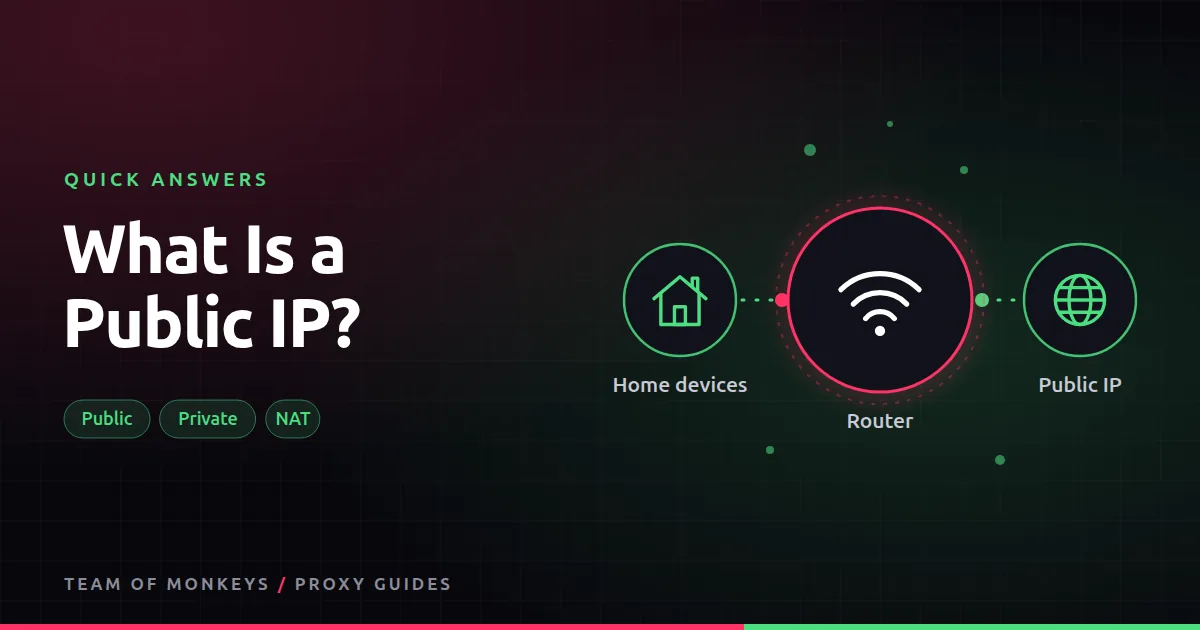
Your public IP is the address websites see. At home, your router has one public IP, and every device behind it (laptop, phone, TV) uses a private IP such as 192.168.1.20 that only exists inside your network.
Why it matters for proxies
A proxy swaps your public IP for its own. To check that a proxy works, compare the public IP a "what is my IP" page shows with and without the proxy. If they match, the proxy is not being used.

Also known as
External IP, WAN IP, internet-facing IP.
Learn more
- What is a proxy IP?
- Static vs dynamic IP
- What is CGNAT?
- How to check if a proxy works
- RFC 1918, private address ranges
- RFC 791, IPv4
- ICANN on how IP addresses are coordinated
- IANA number resources
Affiliate disclosure: Team of Monkeys is an affiliate of Geonode, Webshare and Rayobyte. Links and banners marked as sponsored, and links to Geonode, Webshare and Rayobyte in the text, use our referral links, and we may earn a commission if you buy through them, at no extra cost to you. Our explanations and comparisons are written to be useful whichever provider you choose.
Editorial note: Proxy providers change their pools, features and prices often, so treat any figures here as typical ranges at the time of writing and confirm current terms with the provider before you buy.
Editorial note: Proxy providers change their pools, features and prices often, so treat any figures here as typical ranges at the time of writing and confirm current terms with the provider before you buy.