The short answer
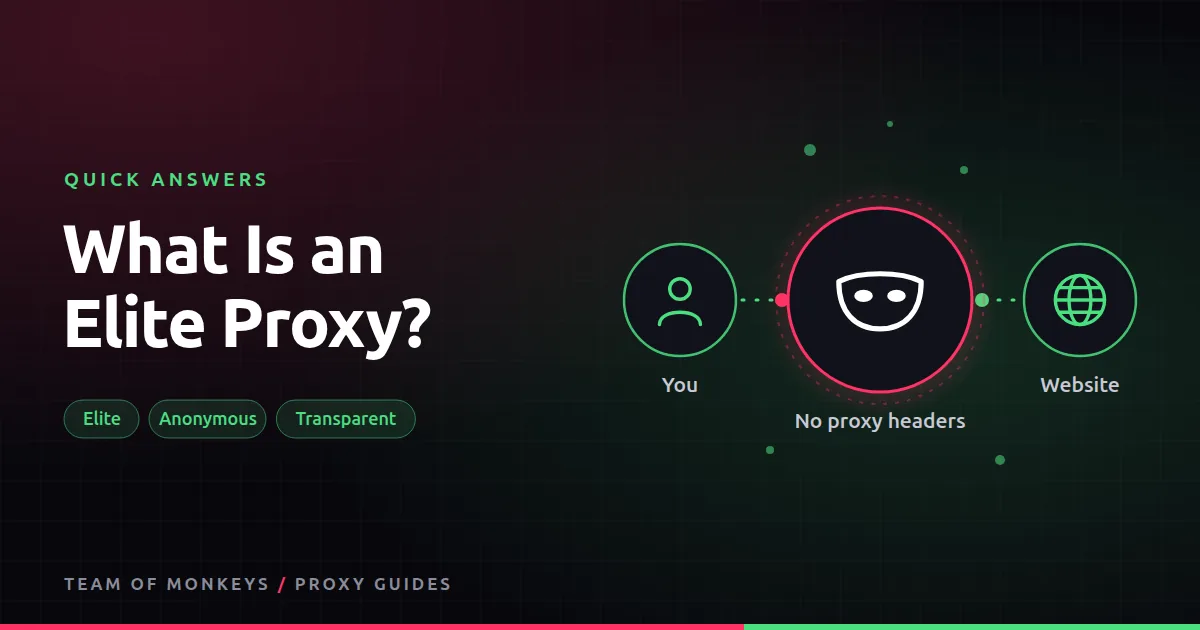
Proxies are traditionally sorted into three anonymity levels:
- Transparent: passes your real IP in headers. Hides nothing.
- Anonymous: hides your IP but admits it is a proxy, for example with a
Viaheader. - Elite (high anonymity): hides your IP and sends no proxy headers at all.
The catch
"Elite" only describes the headers. Websites can still spot a proxy from the IP's ASN, its reputation, timing differences, or browser fingerprints. So an elite datacenter proxy can still be blocked faster than a plain residential one.

Also known as
High anonymity proxy, level 1 proxy, HA proxy.
Learn more
- Proxy anonymity levels
- What is a transparent proxy?
- What is X-Forwarded-For?
- Can websites detect proxies?
- RFC 7239, the Forwarded header
- MDN on X-Forwarded-For
- EFF Cover Your Tracks fingerprint test
- RFC 9110, HTTP semantics (the Via header)
Affiliate disclosure: Team of Monkeys is an affiliate of Geonode, Webshare and Rayobyte. Links and banners marked as sponsored, and links to Geonode, Webshare and Rayobyte in the text, use our referral links, and we may earn a commission if you buy through them, at no extra cost to you. Our explanations and comparisons are written to be useful whichever provider you choose.
Editorial note: Proxy providers change their pools, features and prices often, so treat any figures here as typical ranges at the time of writing and confirm current terms with the provider before you buy.
Editorial note: Proxy providers change their pools, features and prices often, so treat any figures here as typical ranges at the time of writing and confirm current terms with the provider before you buy.