The short answer
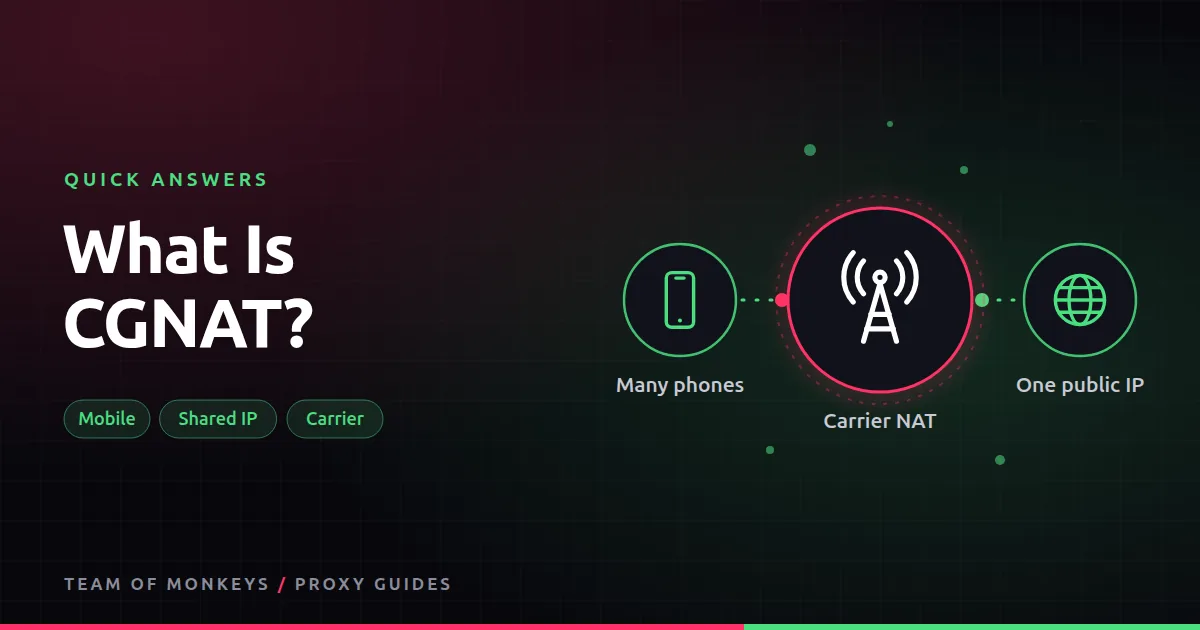
CGNAT (carrier-grade network address translation) is a technique carriers use because there are not enough IPv4 addresses for every phone. Hundreds or thousands of subscribers share one public IP, and the carrier's equipment keeps track of whose traffic is whose.
Why it matters for proxies
If a website bans a mobile IP, it may block thousands of real customers who share it. So most sites treat mobile carrier IPs gently. Mobile proxies take advantage of exactly that, which is why they are the most trusted, and most expensive, proxy type.
The shared address range carriers use inside their networks, 100.64.0.0/10, was set aside for this purpose in 2012.

Also known as
Carrier-grade NAT, large-scale NAT (LSN), NAT444, shared IP.
Learn more
- Mobile proxies explained
- Mobile vs residential proxies
- 5G mobile proxies
- What is a residential IP?
- RFC 6598, shared address space for CGNAT
- RFC 1918, private address ranges
- Carrier-grade NAT overview
- ITU figures on mobile network use worldwide
Affiliate disclosure: Team of Monkeys is an affiliate of Geonode, Webshare and Rayobyte. Links and banners marked as sponsored, and links to Geonode, Webshare and Rayobyte in the text, use our referral links, and we may earn a commission if you buy through them, at no extra cost to you. Our explanations and comparisons are written to be useful whichever provider you choose.
Editorial note: Proxy providers change their pools, features and prices often, so treat any figures here as typical ranges at the time of writing and confirm current terms with the provider before you buy.
Editorial note: Proxy providers change their pools, features and prices often, so treat any figures here as typical ranges at the time of writing and confirm current terms with the provider before you buy.