The short answer
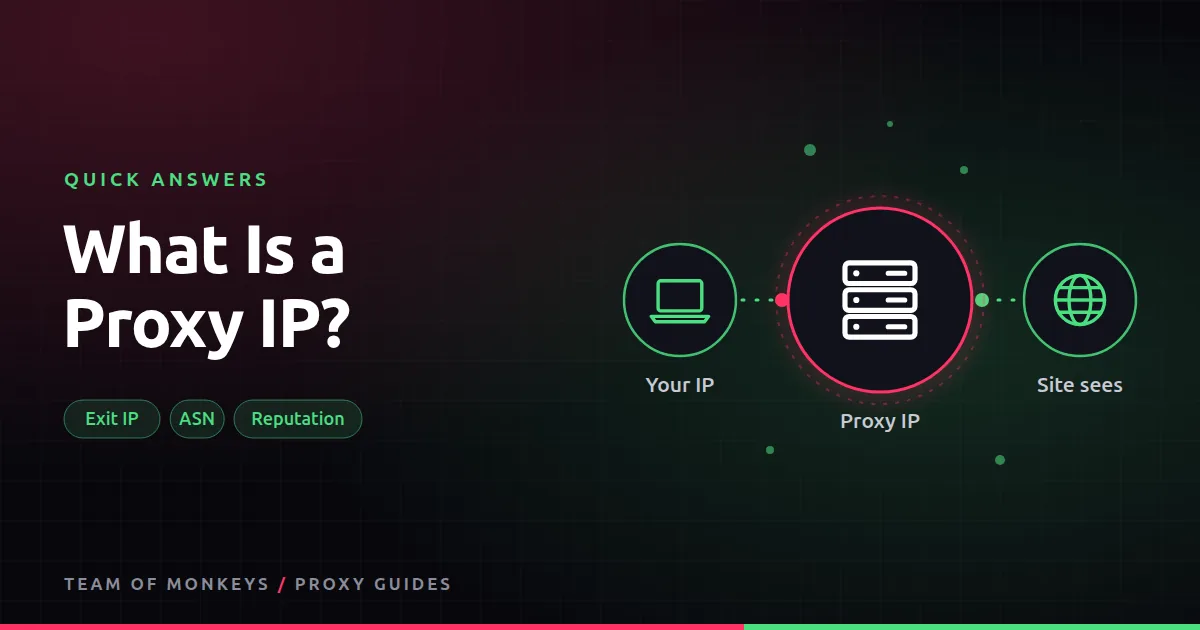
A proxy IP is the public IP address that a proxy server uses when it connects to a website for you. The website records that address, applies its rate limits to it and estimates your location from it. Your real IP stays with the proxy.
Why the type of IP matters
Websites judge the IP before they judge anything else. They look up who owns the address block (its ASN), what kind of network it is, and how it has behaved before:
- Datacenter IPs belong to hosting companies. Fast and cheap, but easy to spot.
- Residential IPs belong to home internet providers. They look like ordinary visitors.
- Mobile IPs belong to cellular carriers and are shared by many real phones, so sites block them reluctantly.

Also known as
Proxy address, exit IP, outgoing IP, egress IP, proxy server IP.
Learn more
- Residential vs datacenter proxies
- IP reputation and proxies
- How proxy providers source their IPs
- What is a residential IP?
- How IANA hands out IP address blocks
- The five regional internet registries
- RFC 791, the IPv4 specification
- The Spamhaus IP blocklists
Affiliate disclosure: Team of Monkeys is an affiliate of Geonode, Webshare and Rayobyte. Links and banners marked as sponsored, and links to Geonode, Webshare and Rayobyte in the text, use our referral links, and we may earn a commission if you buy through them, at no extra cost to you. Our explanations and comparisons are written to be useful whichever provider you choose.
Editorial note: Proxy providers change their pools, features and prices often, so treat any figures here as typical ranges at the time of writing and confirm current terms with the provider before you buy.
Editorial note: Proxy providers change their pools, features and prices often, so treat any figures here as typical ranges at the time of writing and confirm current terms with the provider before you buy.