The short answer
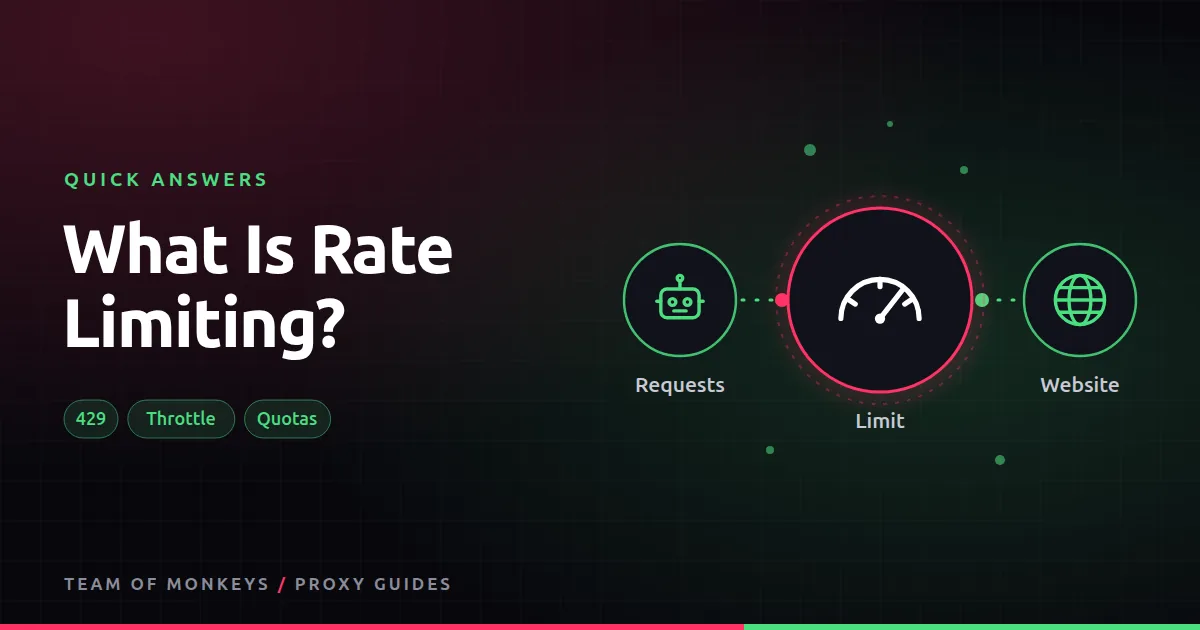
Rate limiting is a website's speed limit. It might allow, say, 60 requests per minute per IP. Exceed it and the site responds with a 429 error, a CAPTCHA, a slower response, or a temporary ban.
How proxies relate
Limits usually apply per IP, so spreading requests across many proxy IPs keeps each one under the limit. Limits can also apply per account, cookie or API key, which proxies do not change. The polite approach: stay well under the limit even when you could go faster.

Also known as
Throttling, request quotas, API limits.
Learn more
- Rate limiting and proxies
- What does 429 mean?
- How to avoid IP bans when scraping
- What is a rotating proxy?
- RFC 6585, the 429 status code
- MDN on 429 Too Many Requests
- The SEC's fair access policy for EDGAR (a real published limit)
- OWASP automated threats
Affiliate disclosure: Team of Monkeys is an affiliate of Geonode, Webshare and Rayobyte. Links and banners marked as sponsored, and links to Geonode, Webshare and Rayobyte in the text, use our referral links, and we may earn a commission if you buy through them, at no extra cost to you. Our explanations and comparisons are written to be useful whichever provider you choose.
Editorial note: Proxy providers change their pools, features and prices often, so treat any figures here as typical ranges at the time of writing and confirm current terms with the provider before you buy.
Editorial note: Proxy providers change their pools, features and prices often, so treat any figures here as typical ranges at the time of writing and confirm current terms with the provider before you buy.