The short answer
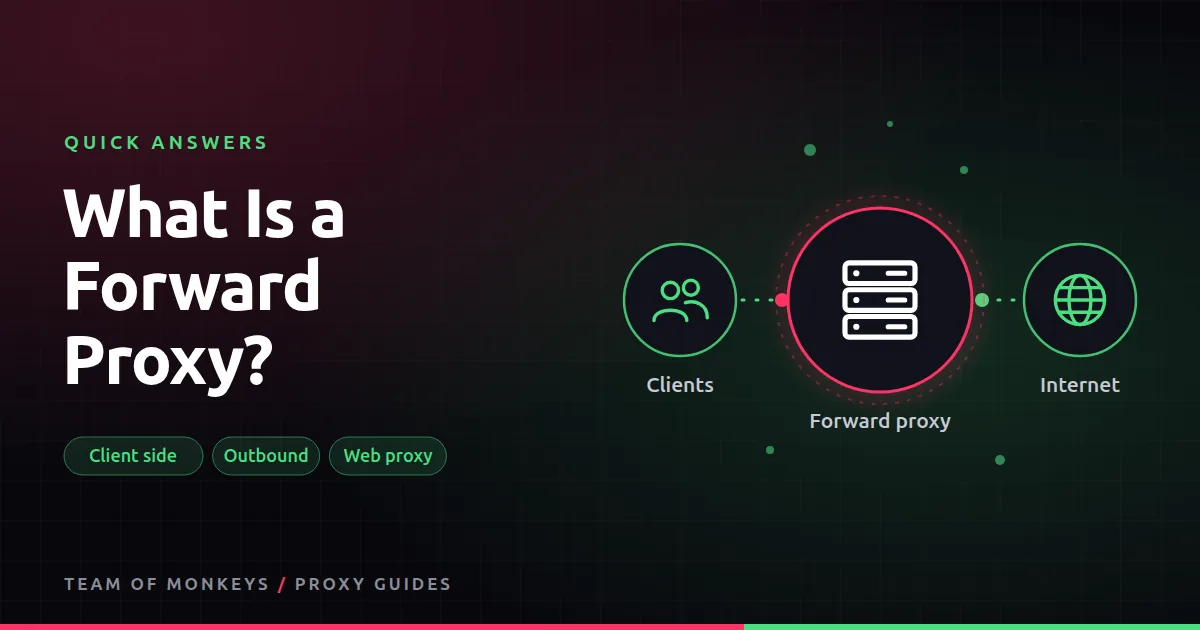
A forward proxy works for the client. You (or your company, or your scraper) send requests to it, and it goes out to the internet for you. Websites see the forward proxy's IP. Every commercial proxy you can buy, residential, datacenter, ISP or mobile, is a forward proxy.
Typical uses
Hiding or changing your IP, appearing in another country, filtering employees' browsing, caching, and spreading scraping traffic across many IPs.

Also known as
Outbound proxy, client-side proxy, web proxy.
Learn more
- Forward vs reverse proxy
- What is a reverse proxy?
- What is a proxy server?
- How proxies work
- MDN on proxy servers and tunneling
- NIST definition of a proxy server
- NIST SP 800-41, firewalls and application proxies
- The Squid forward proxy
Affiliate disclosure: Team of Monkeys is an affiliate of Geonode, Webshare and Rayobyte. Links and banners marked as sponsored, and links to Geonode, Webshare and Rayobyte in the text, use our referral links, and we may earn a commission if you buy through them, at no extra cost to you. Our explanations and comparisons are written to be useful whichever provider you choose.
Editorial note: Proxy providers change their pools, features and prices often, so treat any figures here as typical ranges at the time of writing and confirm current terms with the provider before you buy.
Editorial note: Proxy providers change their pools, features and prices often, so treat any figures here as typical ranges at the time of writing and confirm current terms with the provider before you buy.