The short answer
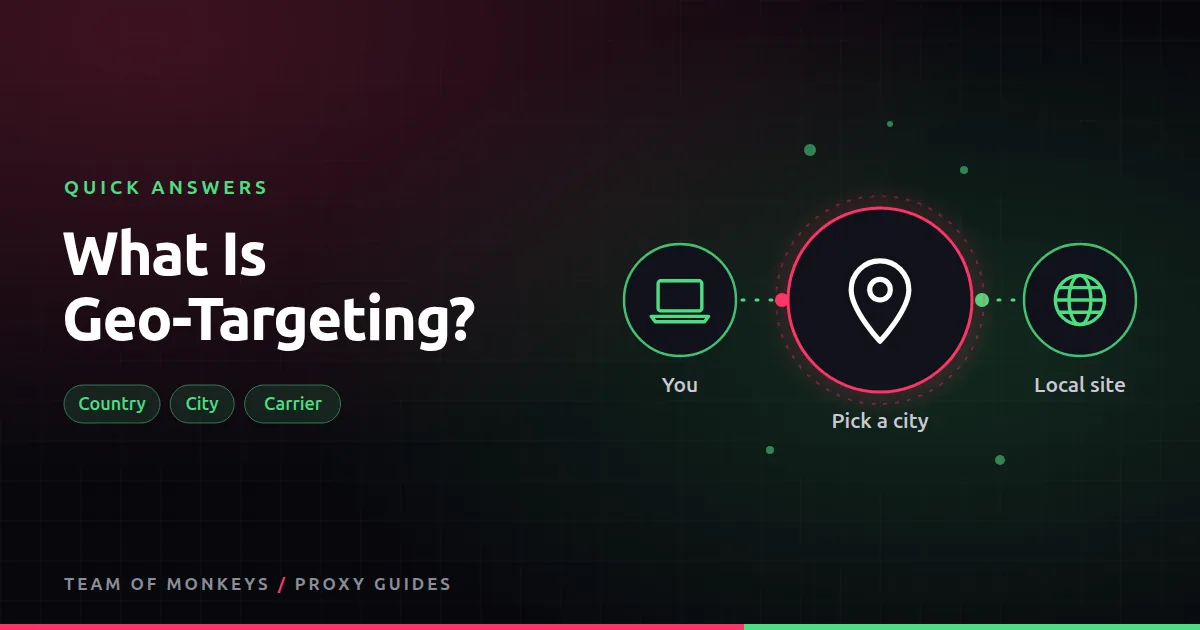
Geo-targeting means asking your provider for an IP in a specific place: "United States", "California", "Los Angeles" or even a particular mobile carrier. You usually set it with a code in the proxy username, like user-country-us.
Why it matters
Websites change prices, search results, ads, languages and availability by location. SEO agencies check local rankings, retailers watch regional prices, and QA teams test localised sites. City-level targeting costs more on some plans, and accuracy depends on IP geolocation databases.

Also known as
Geotargeting, location targeting, country targeting, city-level proxies.
Learn more
- Geo-targeted proxies
- US proxies
- UK proxies
- What is IP geolocation?
- The regional internet registries
- W3C internationalization resources
- APNIC, the Asia Pacific registry
- LACNIC, the Latin America registry
Affiliate disclosure: Team of Monkeys is an affiliate of Geonode, Webshare and Rayobyte. Links and banners marked as sponsored, and links to Geonode, Webshare and Rayobyte in the text, use our referral links, and we may earn a commission if you buy through them, at no extra cost to you. Our explanations and comparisons are written to be useful whichever provider you choose.
Editorial note: Proxy providers change their pools, features and prices often, so treat any figures here as typical ranges at the time of writing and confirm current terms with the provider before you buy.
Editorial note: Proxy providers change their pools, features and prices often, so treat any figures here as typical ranges at the time of writing and confirm current terms with the provider before you buy.