The short answer
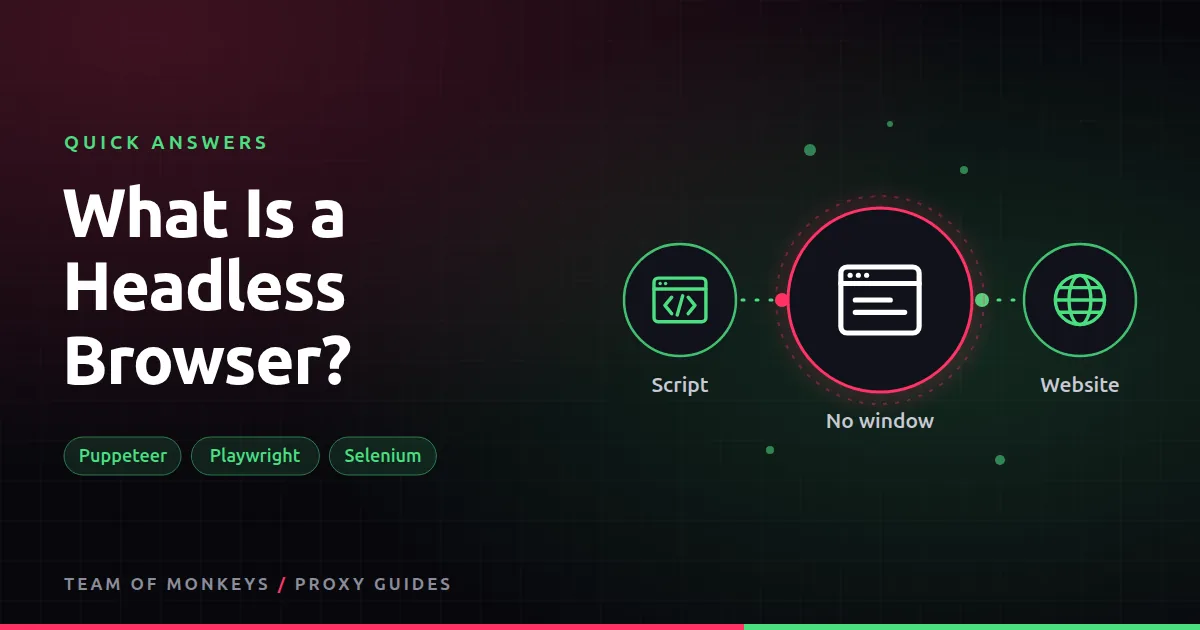
A headless browser is a normal browser engine with the screen switched off. Code tells it what to do: open this page, click that button, read this text. Because it runs JavaScript like a real browser, it can handle modern sites that simple HTTP scripts cannot.
Where proxies come in
Each headless browser can be launched with a proxy, so a fleet of them can browse from many IPs and countries. Sites look for headless giveaways, such as the navigator.webdriver flag, which is why stealth plugins exist.

Also known as
Headless Chrome, headless mode, browser automation, automated browser.
Learn more
- Headless browser proxies
- Puppeteer proxies
- Playwright proxies
- Selenium proxies
- Headless browser overview
- Puppeteer documentation
- Playwright network and proxy docs
- W3C WebDriver standard
Affiliate disclosure: Team of Monkeys is an affiliate of Geonode, Webshare and Rayobyte. Links and banners marked as sponsored, and links to Geonode, Webshare and Rayobyte in the text, use our referral links, and we may earn a commission if you buy through them, at no extra cost to you. Our explanations and comparisons are written to be useful whichever provider you choose.
Editorial note: Proxy providers change their pools, features and prices often, so treat any figures here as typical ranges at the time of writing and confirm current terms with the provider before you buy.
Editorial note: Proxy providers change their pools, features and prices often, so treat any figures here as typical ranges at the time of writing and confirm current terms with the provider before you buy.