The short answer
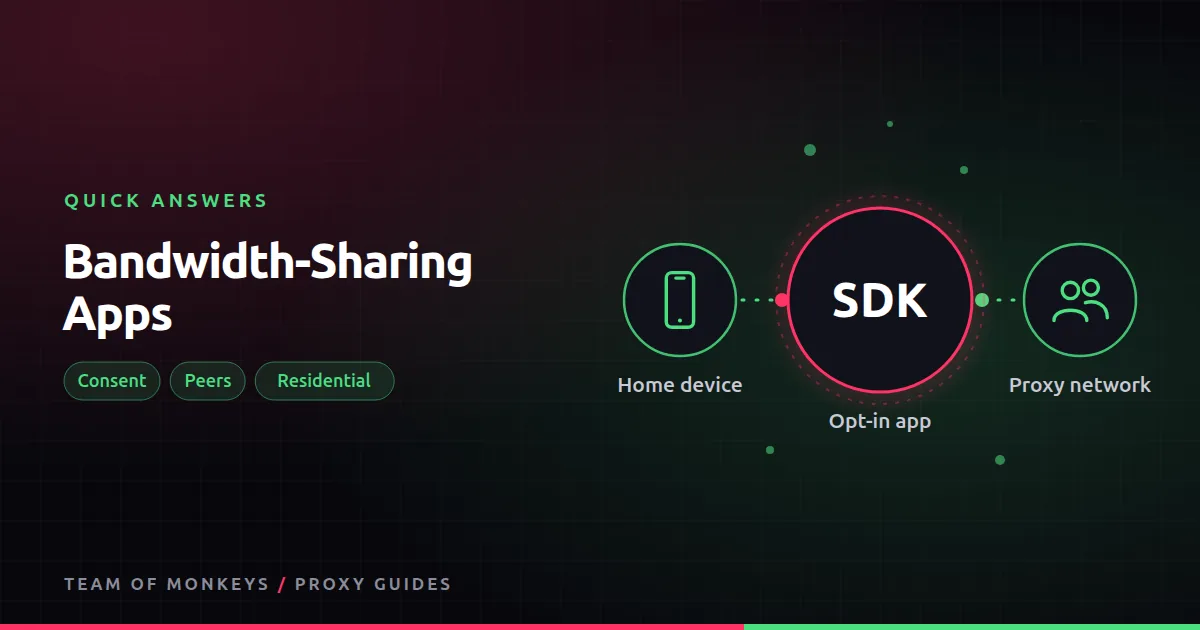
Residential proxy networks need real home connections. One common way to get them: an app or SDK that asks people to share some of their unused bandwidth, in return for money, credits, or an ad-free version of another app. While it runs, proxy customers' requests exit through that home IP.
What good looks like
Clear opt-in consent, an obvious way to stop, limits on what traffic is allowed, and payment or a fair trade. The opposite, devices enrolled by malware without consent, has been the target of law-enforcement takedowns.

Also known as
Proxyware, passive income app, peer SDK, residential proxy SDK.
Learn more
- How proxy providers source their IPs
- Ethically sourced proxies
- What is a residential IP?
- Residential proxies
- US DOJ: the 911 S5 botnet takedown
- FBI warning on residential proxy botnets
- MITRE ATT&CK on proxy abuse
- The EU's GDPR text on consent
Affiliate disclosure: Team of Monkeys is an affiliate of Geonode, Webshare and Rayobyte. Links and banners marked as sponsored, and links to Geonode, Webshare and Rayobyte in the text, use our referral links, and we may earn a commission if you buy through them, at no extra cost to you. Our explanations and comparisons are written to be useful whichever provider you choose.
Editorial note: Proxy providers change their pools, features and prices often, so treat any figures here as typical ranges at the time of writing and confirm current terms with the provider before you buy.
Editorial note: Proxy providers change their pools, features and prices often, so treat any figures here as typical ranges at the time of writing and confirm current terms with the provider before you buy.