The short answer
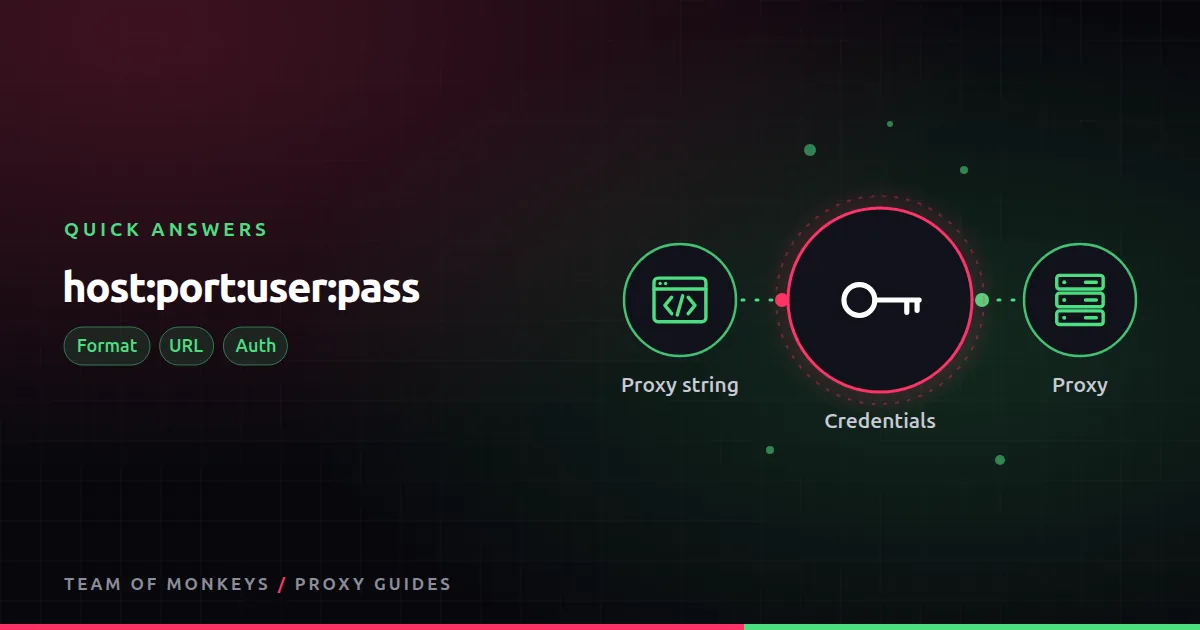
A line such as 198.51.100.7:8080:alice:s3cret packs four things together:
- host: the proxy server's IP or hostname (
198.51.100.7) - port: the port it listens on (
8080) - user: your proxy username (
alice) - pass: your proxy password (
s3cret)
Turning it into a proxy URL
Most code and tools want a URL instead: http://alice:s3cret@198.51.100.7:8080. Use socks5:// instead of http:// if the port is a SOCKS5 port. If your password contains @ or :, URL-encode it first, or the tool will read it wrongly.
If you use IP whitelisting instead of a password, you only need host:port.

Also known as
ip:port:user:pass, proxy string, proxy credentials format, authenticated proxy format.
Learn more
- Proxy authentication methods
- Proxy ports explained
- Using a proxy with curl
- How to check if a proxy works
- RFC 7617, Basic authentication
- RFC 1929, SOCKS5 username and password
- The curl manual
- Python's urllib.request and ProxyHandler
Affiliate disclosure: Team of Monkeys is an affiliate of Geonode, Webshare and Rayobyte. Links and banners marked as sponsored, and links to Geonode, Webshare and Rayobyte in the text, use our referral links, and we may earn a commission if you buy through them, at no extra cost to you. Our explanations and comparisons are written to be useful whichever provider you choose.
Editorial note: Proxy providers change their pools, features and prices often, so treat any figures here as typical ranges at the time of writing and confirm current terms with the provider before you buy.
Editorial note: Proxy providers change their pools, features and prices often, so treat any figures here as typical ranges at the time of writing and confirm current terms with the provider before you buy.